Pedestrian Accident in Vancouver, WA: Your Rights and Legal Options
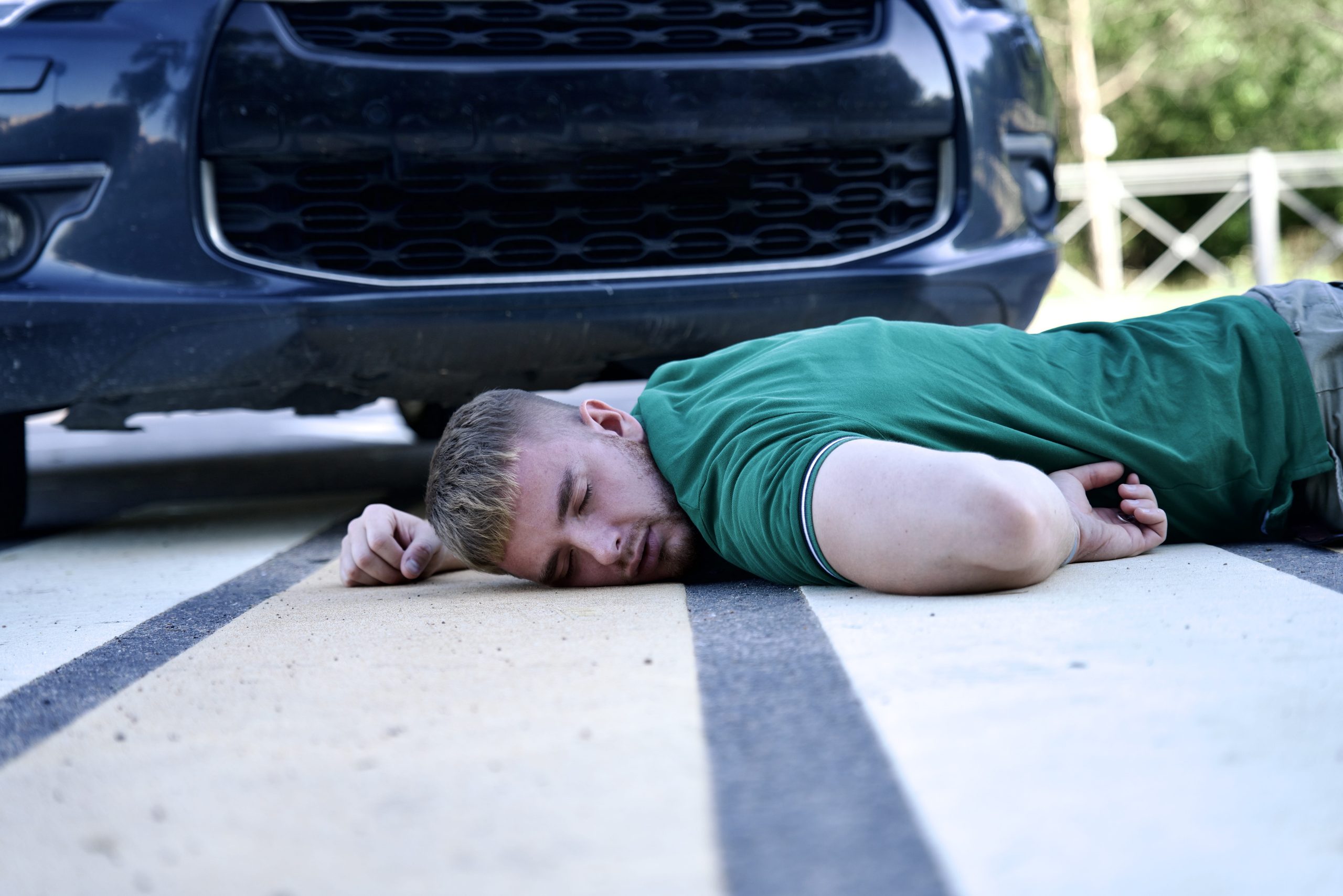
If you are hit by a driver while a pedestrian in Vancouver you may have a claim for damages. Pedestrians have the right to use the streets of Vancouver and under Washington law drivers are required to stop and remain stopped for pedestrians in both marked and unmarked crosswalks. This means that every intersection is considered a crosswalk not requiring any marking unless a sign indicates that crossing is prohibited.
Even if you are found to be partially at fault for your injury, you may still recover for your damages. In Washington, your award for damages will be reduced by the percentage of fault that you bear for the injury for which you are making a claim. Typically, a person has three years to file a lawsuit for injuries sustained in a pedestrian-vehicle accident. Evidence however can disappear rather quickly so it is best to act early.
Why Pedestrian Accidents Cause Severe Injuries
Vulnerable in a collision, pedestrians can be severely injured even in low-speed accidents.
Common injuries include:
- Traumatic brain injuries and concussions
- Bone fractures of arms, legs, hips and pelvis.
- Spinal cord injuries and paralysis
- Internal bleeding and organ damage
- Road rash, deep cuts, and scarring
- Psychological trauma, such as anxiety and PTSD
Victims can require long periods of time to heal from their injuries. Many require surgery and then long periods of time to be able to go back to work.
Common Causes of Pedestrian Accidents
Most of the pedestrian accidents are caused by drivers’ errors.
- Failing to yield at crosswalks and intersections
- Distracted driving, such as texting or using a phone
- Speeding in neighborhoods, school zones, and downtown areas
- Impaired driving from alcohol, drugs, or fatigue
- Turning without checking for people in the crosswalk
- Backing up in parking lots and driveways
- Running red lights and stop signs
- The sight obstruction caused by weather or at night that causes a driver to travel at an unsafe speed.
- Hit-and-run drivers who flee the scene
Washington Pedestrian Right-of-Way Laws
Washington laws relating to pedestrians are listed below.
Drivers Must Stop for Pedestrians in Crosswalks
RCW 46.61.235 states that the driver of an approaching vehicle must stop and remain stopped to allow pedestrians in crosswalks within the driver’s half of the roadway to move in the direction of, and towards, the traveled portion of the roadway, or approaching from the opposite half of the roadway so close that to permit them to move in the direction of, and towards, the traveled portion of the roadway would constitute imminent hazard.
Every Intersection Is a Crosswalk
Under Washington law, every intersection is a crosswalk, unless otherwise indicated by signs with words such as “NO CROSSING” or “NO RIGHT/LEFT TURN ON RED.” Thus, pedestrians are expected to be given right-of-way at all intersections and drivers must pay particular attention to pedestrians at these locations.
Drivers Must Not Pass a Stopped Car
Therefore, when another driver stops for a pedestrian, no other driver should try to pass that stopped driver to proceed down the road.
Pedestrians Also Have Duties
Pedestrians have a number of duties as well. Those that leave the curb suddenly to move in front of a car and enter the path of a vehicle too close to stop are generally considered to be at fault for their injuries. Also, those that cross mid-block outside of a crosswalk have the duty to yield to cars on the road (RCW 46.61.240).
Even when a pedestrian was not using a crosswalk and crossed in the middle of a block, he or she is not necessarily barred from recovering for injury or death when the driver failed to use due care.
Who Can Be Liable for a Pedestrian Accident?
The typical person responsible for the pedestrian injury is the driver; but there may be others, such as the owner or driver of the vehicle operated with the owner’s permission; the employer of the driver; the operator of, for example, a rideshare or delivery service; or the government which designed or
- The driver who struck you
- The vehicle owner, if someone else drove with permission.
- An employer, when a driver was working
- A rideshare or delivery company, in some situations
- A government agency for dangerous road design, a missing traffic signal or poor maintenance of roads and traffic signals.
- A property owner, for hazards on private walkways or parking lots.
- A vehicle or parts manufacturer who was responsible for a defect in the vehicle or part that caused the accident.
Identifying all responsible parties can also result in a larger pool of insurance dollars available to compensate you for your injuries.
What Compensation Can You Recover?
The compensation you can receive in a pedestrian accident claim includes:
- Medical expenses, past and future
- Lost wages and reduced earning ability
- Pain and suffering
- Emotional distress and mental anguish
- Loss of enjoyment of life
- Disability and disfigurement
- Property damage (such as a cell phone, bicycle, or glasses)
- Wrongful death damages for families who lose a loved one
As noted above, no monetary limit applies to damages in Washington; further, damages generally are not subject to increase by punitive damages.
How Fault Works in a Pedestrian Accident
We explain how fault works in a pedestrian collision in Washington. The amount of recovery in a personal injury case is reduced by the pedestrian’s percentage of fault for his or her injuries.
An example of this is a jury returning a decision for $150,000 in damages, but finding you 20% at fault for having crossed against a red light. Your recovery would be $120,000.
The negligence of the pedestrian can be put forth by the insurance adjuster as the reason for their injuries. For example, the pedestrian was wearing dark clothing, he or she was texting, or he or she crossed at a spot other than a crosswalk. Proving facts in opposition to these arguments by the insurance adjuster can strengthen your case.
Insurance Coverage in Pedestrian Accident Claims
Several insurance sources may apply:
- The driver’s liability coverage will pay for your injuries and damage that the driver caused.
- Your own auto policy Personal injury protection (PIP) to pay for your medical treatment and part of your lost wages even if another party is responsible for the accident.
- Note that un unarmed or underinsured motorist coverage is available in most states to protect pedestrians against drivers that are uninsured or underinsured.
- Even though your health insurance may pay for your immediate medical care, they will look to your settlement to attempt to recoup all of their payments to you for your care.
Reviewing your own insurance policies for coverage is equally important even if you are not an operator involved in the accident.
What to Do After a Pedestrian Accident
Protecting yourself, your rights, and your claims can begin immediately by taking the proper steps following an accident.
- Make sure to call 911 and report the incident. In most cases 911 will send an ambulance to tend to your injuries even if you don’t feel any.
- Seek immediate medical treatment. Many serious injuries will not immediately present symptoms.
- Stay at the scene and tell the police everything you know about what happened. Request a copy of the police report with report number.
- Get the driver’s name, phone number, and vehicle license plate number, as well as their vehicle’s make and model and the name of their insurer.
- Document everything by taking pictures of everything, including the vehicles, your injuries, the crosswalk, all traffic signals, all signs, and all lighting.
- Collect information from any independent witnesses to your accident.
- Search for cameras. Frequently businesses, homes and buses are equipped with video and often these systems delete video in a few days.
- Keep clothing and other personal items from your accident and do not wash or repair them.
- Do not give recorded statements to the other party’s insurance company. Wait until you have spoken with a personal injury attorney.
- Do not accept a low offer to settle your case early. Such offers typically do not contain enough money to pay for your long-term care needs.
- Contact a personal injury attorney promptly.
What If the Driver Fled the Scene?
Washington law requires drivers involved in an injury accident to stop and give their information and reasonable help. If a driver flees:
- Report the crash to police immediately.
- Share with the investigating police any information that you have about the other vehicle such as the color, make, model, partial license plate number, and the direction that the vehicle went.
- Ask nearby businesses for surveillance footage.
- Notify your insurer. Your UM/UIM coverage may apply.
If the other driver is found, he or she can be charged with a crime for a hit-and-run accident as well as for the injury he or she caused.
How Long Do You Have to File a Claim?
There is a 3-year statute of limitations for most personal injury claims in Washington (RCW 4.16.080). This includes claims against local governments. Note, however, that there are special procedures and time limits for claims against government entities such as a city or county, and exceptions to the three-year limitation period for children.
There is no reason to delay. The evidence needed to prove a claim may be lost over time.
How McAleer Law Can Help
At McAleer Law, we serve Vancouver and all of the Clark County pedestrian collision victims. Our highly effective approach to collision injury cases is to first investigate the incident, then collect and preserve all relevant evidence, determine all parties responsible for the collision, and aggressively negotiate with all of their insurance companies to assure our client is fully compensated for their injuries.
We will:
- Gather police reports, video, and witness statements
- Review your medical records and bills
- Identify every available insurance policy
- Calculate your full losses, including future care
- Fight back against unfair fault arguments
- Take your case to trial if an insurer refuses to offer fair compensation to you.
Hit by a car while walking? Call (360) 891-2085 for a free and confidential pedestrian crash consultation.
Frequently Asked Questions
Who is at fault in a pedestrian accident in Vancouver WA?
Who is at fault for a pedestrian accident in Washington? Fault for pedestrian accidents generally involves the driver’s failure to yield to a pedestrian in a crosswalk (marked or unmarked) and the pedestrian’s failure to act as a reasonable person would in a given situation. Fault is assigned by percentage of fault.
Can I recover if I was not in a crosswalk?
Similarly, a pedestrian who does not use a crosswalk still has rights if the driver failed to drive safely and hit the pedestrian. The amount of compensation that a pedestrian can receive for his or her injuries will be reduced by the pedestrian’s fault.
What if the driver had no insurance?
You may be able to recover from your own uninsured/underinsured motorist insurance, and there may be other parties at fault as well.
What if the driver left the scene?
UM/UIM coverage applies to hit-and-run accidents involving vehicles, even if the vehicle was driven by an uninsured driver and even if the driver abandoned the scene of the accident. Often within a few days the police are able to identify the responsible driver.
How long do I have to file a pedestrian accident lawsuit?
Washington has a 3-year statute of limitations for most pedestrian-related personal injury cases; special procedures and shorter time periods may apply when suing a governmental entity.
How much is my pedestrian accident claim worth?
Medical bills, wages lost while out of work, extent of injury, long-term effects of injury and degree of fault all can impact your pedestrian accident case value.
Should I talk to the insurance company?
It is wise to consult with an attorney before speaking with an insurance company about a claim. The attorney can assist you in communicating with the insurance company to ensure that your interests are being protected and that any statement provided by you will not be used against you in ways that could decrease or deny your claim.
Do I need a lawyer for a pedestrian accident claim?
While it is not necessary to retain an attorney for a pedestrian accident case, he or she will generally gather all necessary evidence, defend against fault, and get you the full compensation you are entitled to.